Alexandar Sullivan:
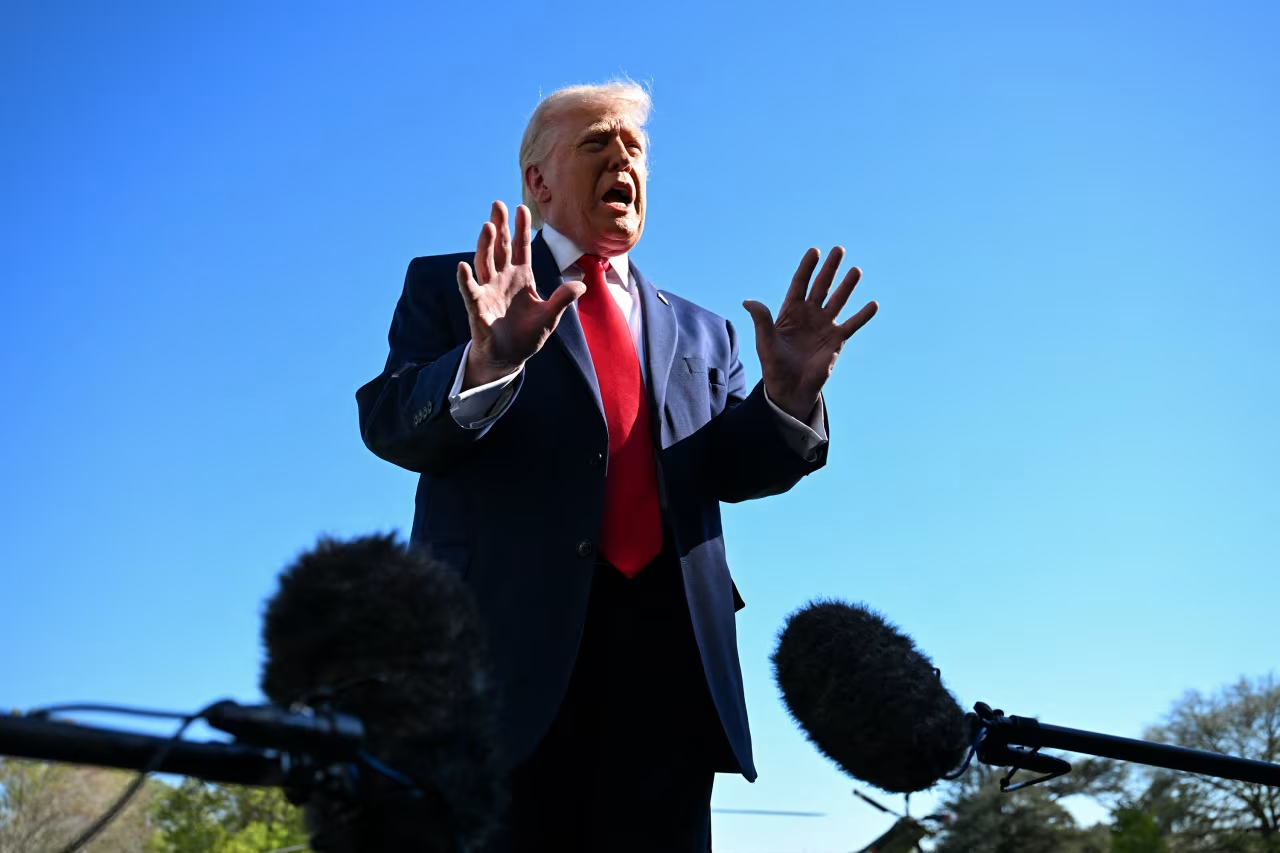
President Donald Trump announced on Sunday that the United States will initiate a naval blockade of the Strait of Hormuz, escalating tensions after high-level negotiations between Washington and Tehran ended without an agreement.
The move follows marathon talks held in Pakistan, where both sides failed to resolve disputes over Iran’s nuclear program and control of the strategic waterway. Trump said the U.S. Navy would begin interdicting vessels suspected of paying what he described as “illegal tolls” to Iran, while also coordinating with allies to clear mines from the region.
The Strait of Hormuz, a narrow passage between the Persian Gulf and the Gulf of Oman, is one of the world’s most critical energy corridors, responsible for transporting roughly one-fifth of global oil supplies. Analysts warn that any disruption could trigger sharp increases in oil and gas prices worldwide, affecting both consumers and industries.
Trump expressed confidence that Iran would return to the negotiating table, stating that the United States had secured “just about every point” during discussions but could not reach a final deal. He also renewed warnings of potential military action, citing infrastructure targets such as power grids and bridges if diplomacy fails.
Iranian officials, meanwhile, signaled resistance, maintaining that the strait remains under their control and cautioning against any military interference. Questions remain over how the blockade will be enforced and how major energy-importing nations will respond.
As tensions rise, international voices—including the European Union and regional mediators—have urged both sides to resume dialogue. With the current ceasefire set to expire on April 22, the situation remains uncertain, with significant implications for global stability and energy markets.
For more blogs, visit nyn.press