Alexandar Sullivan:
Senior members of President Donald Trump’s national security team initially voiced reservations about a potential war with Iran, but ultimately aligned with the president’s decision to launch military strikes, reflecting the dynamics inside the White House as the conflict unfolded.
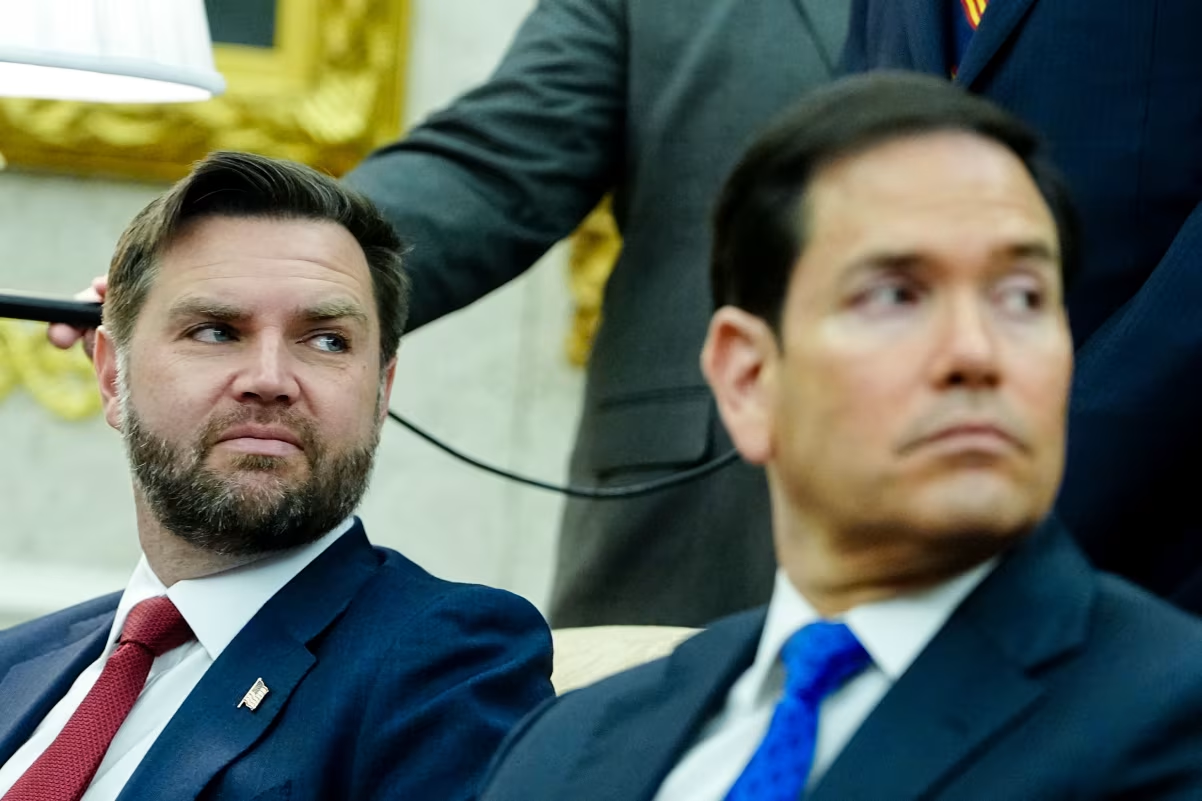
Among the earliest skeptics was Vice President JD Vance, a former Marine who had built his political profile partly on opposition to prolonged foreign conflicts. According to people familiar with the discussions, Vance warned about the risks of a new Middle East war but later supported a strategy of swift and decisive action once it became clear the president favored military intervention.
The administration launched its first strikes on February 28, beginning a campaign that officials have described as “Operation Epic Fury.” Secretary of State Marco Rubio, Joint Chiefs Chairman Gen. Dan Caine, and other senior figures had also initially urged caution, raising concerns about the geopolitical and military consequences of attacking Iran.
Despite those early doubts, advisers ultimately focused on implementing the president’s decision rather than attempting to block it. “If the president was unwilling or unable to say no, we were going to war,” said Curt Mills, executive director of The American Conservative.
As the conflict enters its early stages, the administration faces mounting challenges, including evacuating Americans from the region and addressing economic pressures tied to rising oil prices. Disruptions in shipping through the Strait of Hormuz have driven fuel costs to their highest national average in more than two years.
White House spokesperson Taylor Rogers said Trump’s national security team is working daily to ensure the success of the operation, though officials acknowledge that the long-term trajectory of the conflict remains uncertain.
For more blogs, visit nyn.press