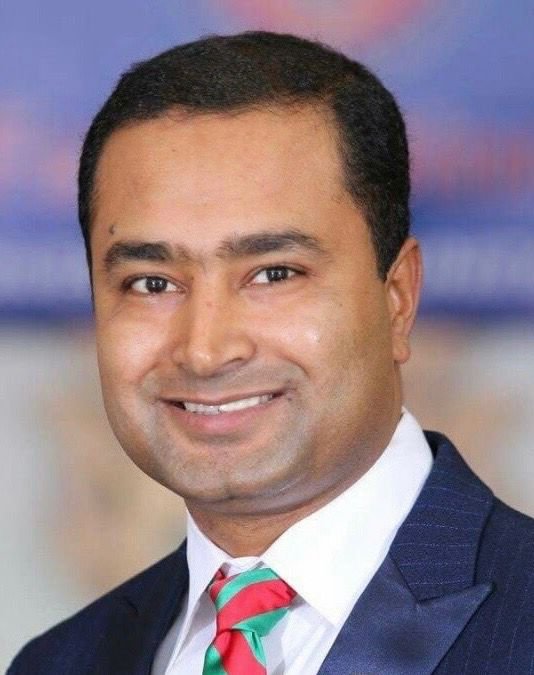
By Sujat Khan, Ph.D.
Adjunct Professor, Iona University
With over two decades of experience in the criminal justice system—working across shifts during the day, night, and peak operational hours—I have gained extensive expertise in both the practice and study of criminal justice. Over the course of my career, I have observed firsthand how various policies have been implemented and the ways in which they have affected both law enforcement and the communities they serve. While the NYPD remains one of the most capable police departments in the world, it has too often been tasked with responsibilities that extend beyond its core mission. That is why I believe mayoral candidate Zohran Mamdani’s bold strategy to refocus policing in New York City is not only timely and essential, but also a vital step toward making our city the fairest place in the world to live and work.
Police Should Focus on Crime—Not Non-Crime Calls
Policing is at its best when officers can dedicate themselves to preventing and solving crime. Yet today, NYPD officers are routinely dispatched to handle non-crime calls such as non-violent emotionally disturbed persons (EDP), blocked driveways, fire alarms, security alarms, minor disputes, and noise complaints. These are important community issues, but they do not require armed police officers.
When the police are stretched thin responding to calls better suited for mental health professionals, firefighters, or municipal enforcement agents, the result is predictable: slower response to real emergencies, strained resources, and public frustration. Mamdani’s plan would allow officers to return to what they do best—protecting the public from crime and violence.
Smarter Responses for a Safer City
Under Mamdani’s strategy, mental health crises will be addressed by trained specialists who can de-escalate situations and connect people to care. Fire alarms would remain the responsibility of the FDNY, while blocked driveways and civil disputes would be handled by the appropriate city agencies. This multi-agency approach ensures that the right professionals are responding to the right problems.
This is not just common sense—it is also a matter of safety. Sending police to non-crime calls often leads to situations where a uniformed presence escalates tensions unnecessarily. Shifting these responsibilities away from the NYPD reduces civilian complaint reports (CCRB), decreases other civil and criminal litigations against the NYPD, and increases public trust and confidence in the department.
Improving Morale, Response Times, and Retention
From my professional experience and academic research, I know that officer morale matters. When police are continually tasked with jobs outside their mission, it creates frustration, burnout, and in many cases, early resignation or career shifts. Mamdani’s approach changes that. By narrowing the scope of policing:
Response times for emergencies will improve, because officers will not be tied up with non-crime calls.
Stress and burnout will decrease, since officers can focus on meaningful, mission-driven work.
Officer turnover will be reduced, because officers will feel more effective, valued, and supported in their roles.
When officers are healthier and more focused, the city as a whole becomes safer.
Serving All New Yorkers, Equally
One of the most compelling parts of Mamdani’s vision is that it serves every New Yorker, regardless of social or economic status, or the neighborhood they call home.
In wealthier “good neighborhoods,” residents often rely on private services, yet they too benefit from an NYPD that is focused on crime rather than distracted by non-crime tasks.
In working-class and underserved neighborhoods, where calls for service are higher and trust in policing has often been strained, residents will gain from faster police responses, less unnecessary enforcement, and stronger community partnerships.
Whether someone lives on the Upper East Side, in Jackson Heights, or in Brownsville, this strategy ensures fairer, more consistent, and more effective public safety.
Safety should never depend on one’s zip code or income level. Mamdani’s plan recognizes that reality and creates a policing model that works for all.
Listening to Experts, Inside and Outside the NYPD
What further distinguishes Mamdani’s strategy is his outreach to a diverse group of criminal justice experts—both from within the NYPD and from outside law enforcement. His team is exploring new ideas to improve the quality of life for all New Yorkers and make the city even safer. This inclusive, consultative approach is unprecedented in New York City politics and demonstrates his seriousness in tackling the challenges residents face every day.
The Power of JIBON’s Endorsement
When the Jamaica Integrated Bangladeshi Officers Network (JIBON) stands with Zohran Mamdani’s plan, it sends a powerful message. Led by President Karam Chowdhury, JIBON’s members—drawn from across the law enforcement community, including police officers, traffic enforcement agents, school safety agents, corrections officers, and other public safety professionals—know firsthand what it takes to keep New Yorkers safe.
Their endorsement proves that Mamdani’s strategy isn’t about weakening safety—it’s about strengthening it. By allowing the NYPD to focus on fighting crime while other agencies step up to address community needs, this plan makes our neighborhoods safer and our city stronger. When frontline professionals who have worn the badge and served our communities say “this works,” New Yorkers can trust that Mamdani’s vision is the right path forward.
A Smarter Path Forward
Policing must evolve with the realities of modern cities. New Yorkers deserve a system that is both tough on crime and smart about safety. Zohran Mamdani’s vision does exactly that by focusing police resources where they matter most and creating stronger partnerships with other agencies to handle non-crime responsibilities.
As a criminal justice professional, educator, and New Yorker, I believe this is the right path forward. It will not only lower crime but also repair strained relationships between communities and the NYPD, ultimately creating a safer, healthier, and more resilient city for all New Yorkers.